
Lindsey Vonn, Pain, and Identity

What Athlete Moms Can Learn From a 2026 Olympic Comeback
Lindsey Vonn, Pain, and Identity

February 16, 2026 - Written by Chandler Sommerfeldt / The Athlete Mom Project
If you prefer listening, switch gears and head on over to the Athlete Mom Project Podcast to listen to the full break down.
Episode #56 - Lindsey Vonn, Injury, and Identity: Why Your Mind Shapes What Your Body Can Do
There’s something about watching elite athletes that makes us project.
We project courage.
We project recklessness.
We project “I would never.”
Or “I wish I could.”
And during the 2026 Olympics, one name lit up the internet for all of those reasons: Lindsey Vonn. Before we go any further—let me say this clearly: I’m not going to pretend I know what Lindsey is feeling. None of us do. But I do know knees. I know identity. I know pain.
I’ve had three knee surgeries. I’ve trained through injury and pregnancy. I’ve competed in jiu-jitsu and recovered from setbacks. And I coach athletes and moms through pain, fear, and return to sport every day.
So this isn’t a blog post about judgment. It’s about a deeper question: How does identity shape what your body believes is possible?
What happened to Lindsey Vonn in 2026
Lindsey Vonn is one of the most decorated alpine ski racers in history—Olympic medalist, World Cup champion, and a career defined by both dominance and resilience.
In the lead-up to the 2026 Winter Olympics, she announced she had ruptured her ACL after a crash at Crans-Montana and still intended to compete: “As long as there’s a chance, I will try.”
Then, on February 8, 2026, she crashed in the Olympic downhill just seconds into her run and was airlifted away with a complex tibia fracture requiring surgery. In the days that followed, reports described multiple surgeries and a mindset of “no regrets,” including her quote: “the ride was worth the fall.”
And the internet did what the internet does:
Some called it reckless.
Some called it inspiring.
But here’s what I see: Identity.

“Pain is a choice” (what I mean—and what I don’t)
When I say pain is a choice, I do not mean pain isn’t real. A fracture is real. ACL injuries are real. Biology matters. What I mean is this: Pain is not always a choice. But your relationship to pain is.
Fear amplification is influenced by choice. Avoidance is influenced by choice. The story you build around your body is influenced by choice. And that story matters… because pain is not only about tissues.
Pain is also:
threat perception
context
expectation
prior experience
and whether your nervous system believes you are safe
To understand this better, let's back up and dive into a framework about pain. What is pain and how can this framework help us navigate injury and setback in our own life.
One of the biggest fears we have when we’ve been hurt or injured is making it worse or getting hurt again. It would set us back even further, make us feel even more incapable, and cause more frustration and confusion than we already have.
Why athletes (and moms) fear pain so much
Two things have to happen fast—like, in the first 30 seconds—when someone is hurt:
They need to feel seen in their fear.
They need something clear to focus on that promises a way out and gives them security about the process.
Because one of the biggest fears after injury isn’t the pain itself. It’s this:
“What if I make it worse?”
“What if I set myself back again?”
“What if this means I’m stuck like this forever?”
That fear is exactly why I teach the next framework—because it helps us get on the same page about what you’re feeling, why you might be feeling it, and how to make confident decisions about what to do, when to do it, and when to stop.
The four words that change everything:
Insult → Irritation → Pain → Injury
If you only take one thing from this post, take this: Not every sensation is danger. And not every sensation is “injury.” To make good decisions, we have to define what we’re actually experiencing.
1) INSULT
Insult is an unconscious response to a stimulus.
Example: your shirt touching your skin is an insult. The seat you’re sitting on is an insult. It’s input… but it’s not even on your radar most of the time.
2) IRRITATION
Irritation is the conscious response to a stimulus.
If I told you: “Freeze. Don’t move for 90 minutes,” at some point you’d think:
“I need to move.”
That moment—when you consciously decide the sensation is uncomfortable—insult becomes irritation. Here’s the powerful part: Irritation is required for adaptation. Irritation is basically stress. Stress is only a problem if it exceeds our capacity and escapes our ability to respond well. That means intentional irritation within the right boundaries is not only okay—sometimes it’s the exact thing that moves you forward.
3) PAIN
This is the one that changes people’s lives when they truly get it:
Pain is the negative emotional interpretation of irritation—usually tied to uncertainty.
Think about a toddler stubbing their toe. It’s panic. Tears. “Something is wrong!” Now think about you stubbing your toe. You’ll curse, sure—but you probably won’t interpret it as an emergency. Same irritation. Different meaning. Different emotional response.
That space between sensation and meaning is where your power lives.
4) INJURY
Injury is the decision that “I can’t.”
Coaches will sometimes ask: “Are you hurt, or are you injured?” Because “hurt” might mean you keep playing. “Injured” means you stop. A true structural injury can absolutely limit movement.
But many “injuries” people live inside are actually decisions based on pain and fear.
Example: someone has a knee that feels 9/10 going down stairs—so they never load it going down. They can bike, walk, maybe even run… but the story becomes: “I have a bad knee.”
A better, more empowering truth is: “I have a knee that doesn’t go down stairs well right now.” That one sentence changes the entire approach.
The Pain Rules: how to know what’s safe (without spiraling)
Once we agree on those four words, we can move forward with confidence—because there are rules that help you stop guessing.
Here are the Pain Rules we use to guide movement:
Rule 1: Keep it ≤ 4/10
During movement, irritation should never exceed 4/10. Some irritation is often necessary for adaptation. But pushing beyond that (especially from a “no pain, no gain” mindset) is one of the fastest ways to get set back.
Rule 2: It stays the same or reduces
From rep to rep, irritation should stay the same or decrease. If it’s a 4/10 on rep one, it should remain 4 or drop to 3, 2, 1, 0. If it climbs? We change something: range of motion, load, tempo, or the movement itself.
Rule 3: When you stop, it stops
When the movement stops, the irritation should stop. If you put the weight down and it lingers, we adjust—because some tissues need a different exposure or more recovery.
Rule 4: Back to baseline within 48 hours
Within 48 hours, irritation should be no worse than it was during training. If you trained at a 4/10 Friday, by Sunday it should be 4 or lower—ideally trending down. If you wake up and it feels like a knife is in your shoulder? That’s data. We adjust the next session to meet your new baseline.

What Lindsey Vonn’s story reveals about pain and identity
This is why Lindsey’s story is so fascinating—and why it triggers so much projection.
Most people see the load:
Age
Olympic pressure
ACL rupture
Downhill racing on the biggest stage
But what they don’t see is capacity:
decades of tissue adaptation
elite neuromuscular control
progressive exposure history
psychological resilience
I’ve-been-here-before nervous system
That’s why I teach Capacity vs Load: Pain often shows up when load exceeds capacity repeatedly without enough recovery. Lindsey has a level of capacity most people can’t comprehend—because she built it over decades.
And here’s the key: Identity determines how much capacity you allow yourself to access. If you identify as fragile, your nervous system behaves fragile. If you identify as resilient, your system recruits differently. Not invincible. But different.
What athletes can do with this (practical steps)
If you’re coming back from injury, pregnancy, postpartum, or chronic pain—here’s what matters most:
1) Separate injury from identity
Injury happens. But “I’m broken” is a story. Try this reframe: “I’m rebuilding capacity for the life I want.”
2) Use the Four Words when you feel something
Ask: Is this just insult (background input)? Is this irritation (discomfort I can interpret)? Is this pain (fear + uncertainty layered on)? Or am I actually injured (I truly can’t do this right now)?
This changes your next decision.
3) Use the Pain Rules to guide exposure
Stop asking: “Is this dangerous?” Start asking: “Does this follow the rules?”
This keeps you moving without spirals.
4) Dose load intentionally
Random effort → random results. Progress happens when exposure is structured:
breathwork + nervous system regulation
strength + progressive overload
recovery + consistency
5) Build proof for your new identity
Identity isn’t a mantra. It’s evidence. Pick one small win you can repeat daily:
a 10-minute strength session
a walk after meals
breathing drills before training
a pain-rule-based modification that still lets you show up
Stack enough proof… and your nervous system starts to believe you again.
The takeaway
Lindsey Vonn’s story isn’t a blueprint for what you “should” do. It’s a mirror.
Because the real question isn’t:
“Was it reckless or inspiring?”
The real question is:
Who are you choosing to be in your body—right now?
Pain may not always be a choice. But your story about it is. And that story shapes everything.
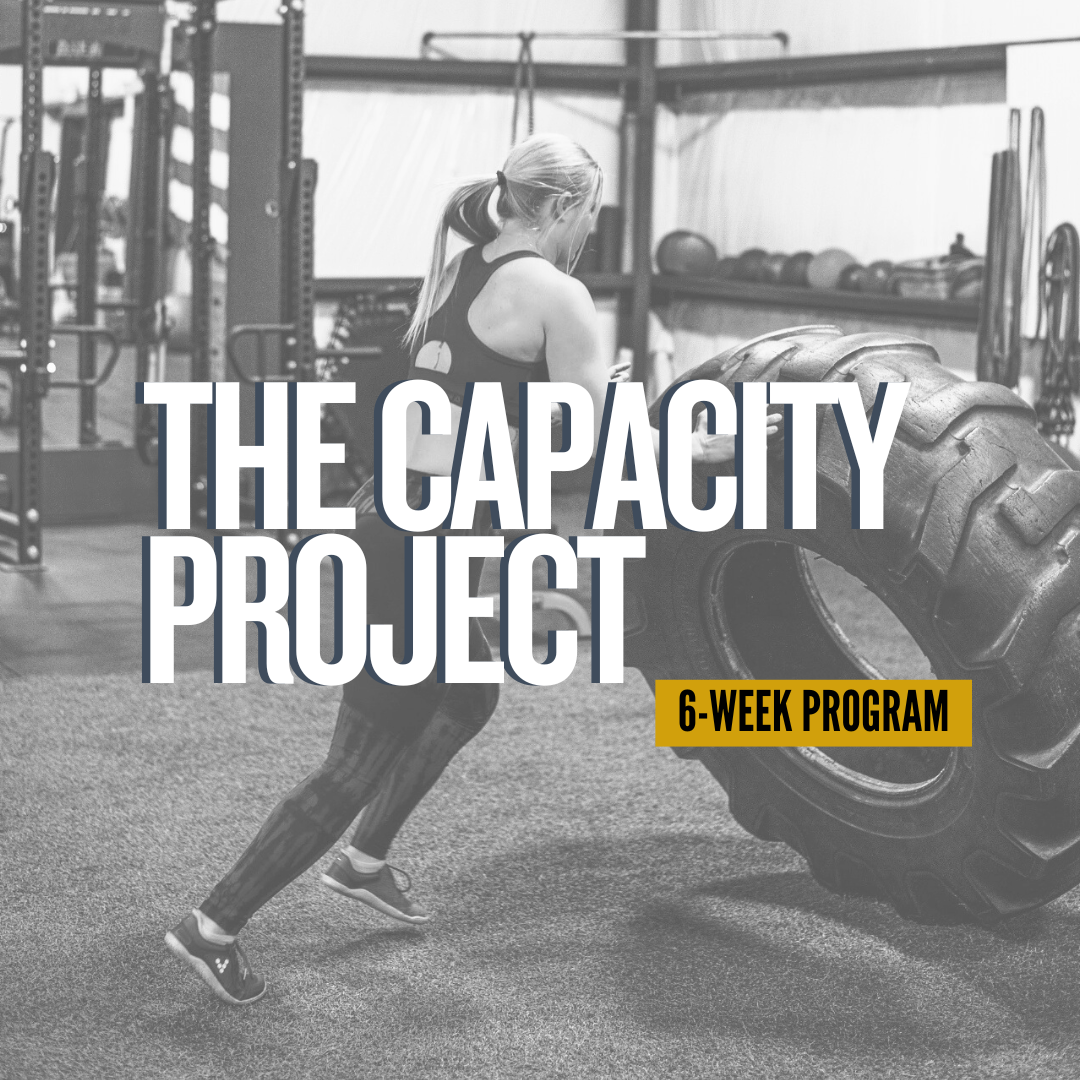
If you want help building your base—breath, nervous system, identity, and progressive exposure—check out the Capacity Project in the links below.
The Capacity Project is a 6-week program designed to improve stress tolerance, recovery, sleep, and performance through breath and nervous system training. Instead of pushing harder, the focus is on building a system that can handle more.When capacity increases, life and training feel steadier and more sustainable.
It's a system created for you so that you can actually tolerate the load you’re asking it to carry — physically and emotionally. This isn’t woo-woo. It’s freaking real you guys.
👉Learn more about the Capacity Project and join here:
[[Join The Capacity Project Today]]
→ Connect with me on Instagram: [@WithChanYouCan]
→ Listen to the Athlete Mom Project Podcast: [Listen To The Pod Here]
→ Work with me (coaching options): [Learn More Here]
Strength and Love,
-Coach Chan


